



Yashoda and Krishna by Raja Ravi Varma — India's Most Iconic Painting | Museum-Grade Art Print
Yashoda and Krishna by Raja Ravi Varma — India's Most Iconic Painting | Museum-Grade Art Print
Paper, canvas or framed? Compare print finishes
Impossibile caricare la disponibilità di ritiro
Available to order
Free shipping within India.
Check delivery date
About the artwork
The most expensive Indian painting ever sold. Now on your wall.
On April 1, 2026, Raja Ravi Varma's "Yashoda and Krishna" sold for ₹167.2 crore ($17.9 million) at Saffronart's Spring Live Auction in Mumbai — shattering every record in Indian art history. The painting was acquired by industrialist Cyrus S. Poonawalla, founder of the Serum Institute of India, who called it "a national treasure."
This is your opportunity to own a museum-grade archival reproduction of this historic masterpiece.
Painted in the 1890s at the height of Ravi Varma's career, the composition captures a moment of extraordinary tenderness. Yashoda, Krishna's foster mother, milks a cow while the infant Krishna — adorned with jewellery, a peacock feather, and a golden dhoti — clings to her from behind, reaching for a golden goblet of fresh milk. It is at once a domestic scene and a divine one — a human mother and a god who chose to be her child.
What made Raja Ravi Varma revolutionary was not his subject but his technique. He was the first Indian artist to master European academic oil painting and apply it to Indian mythological themes — creating images so vivid, so emotionally real, that they became the way an entire nation imagined its gods. His oleograph prints, produced from his own lithographic press established in 1894, brought these images into millions of Indian homes. If you grew up in India, you grew up with Ravi Varma's gods on your walls.
"Yashoda and Krishna" is considered the crown jewel of his work — a painting that art critics have called "the Mona Lisa of Indian art." The composition merges sacred and domestic life with a warmth that transcends religion, culture, and time. A mother. A child. A quiet moment of love. That is its universal power.
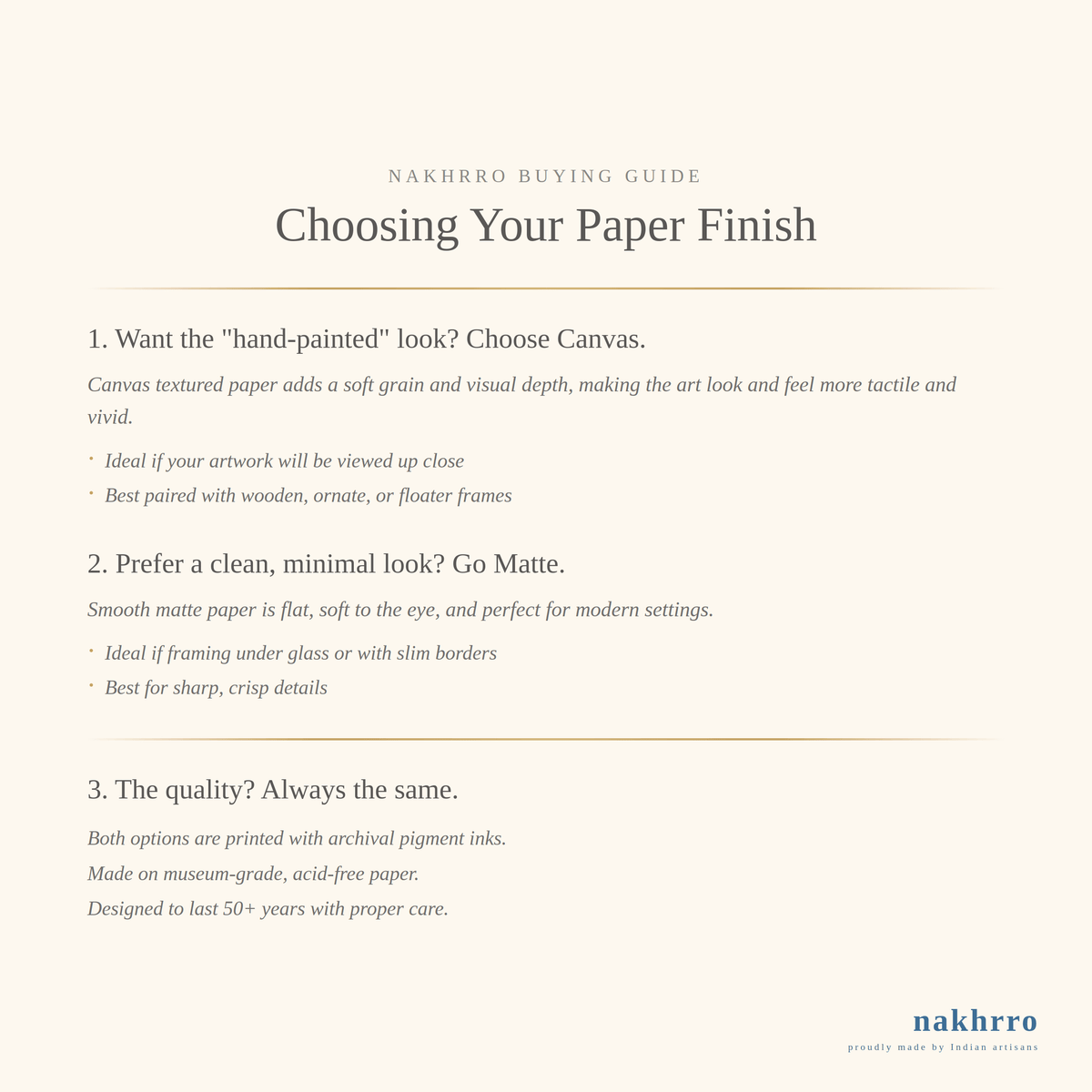
This museum-grade archival print reproduces the original with extraordinary fidelity — capturing Ravi Varma's masterful use of light, his luminous skin tones, the rich textures of Yashoda's green silk and Krishna's golden draping, and the soft warmth of the cow in the background. Printed using Epson giclee technology with archival pigment inks using archival pigment inks on your choice of Archival Matte Paper or Canvas, this print is designed to preserve these details for 80+ years with proper care.
Why this painting matters:
- Sold for ₹167.2 crore on April 1, 2026 — the most expensive Indian artwork ever auctioned
- Previously held in a private Delhi collection; acquired by Cyrus Poonawalla (Serum Institute of India)
- Painted in the 1890s by Raja Ravi Varma, widely regarded as the Father of Modern Indian Art
- Called "the Mona Lisa of Indian art" by auction experts
- Depicts the most universal of human themes — a mother's love for her child
- The painting that defined how India imagines its gods
About Raja Ravi Varma (1848–1906): Born into an aristocratic family in the princely state of Travancore (present-day Kerala), Raja Ravi Varma pioneered the fusion of European realism with Indian mythological subjects. He was the first Indian artist to gain international recognition, winning awards at exhibitions in Vienna and Chicago. In 1894, he established a lithographic press to reproduce his paintings as affordable prints — democratising Indian art and placing gods and goddesses in the homes of millions. His influence on Indian visual culture is immeasurable.
Vastu and cultural significance: Krishna paintings are deeply auspicious for Indian homes. The Yashoda-Krishna bond represents divine love, maternal protection, and the presence of grace in everyday life. This painting carries both spiritual significance and immense cultural prestige — a piece of Indian art history on your wall.




Made to display beautifully
Frame & protection details
Select a material to see the finish and protection included with your framed print.
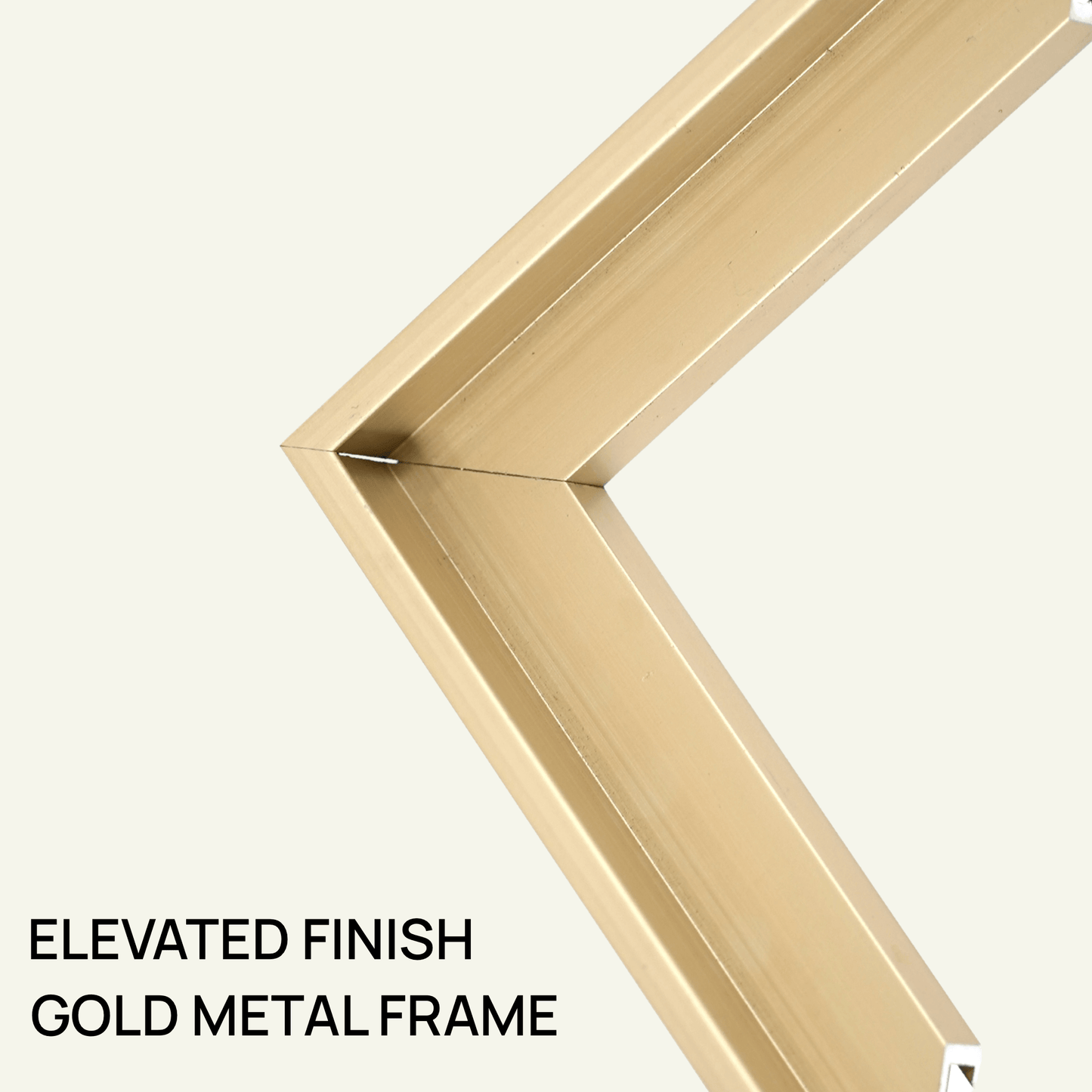
Clean, slim and architectural
A sturdy metal frame imported from Germany, with a refined gold-toned finish. It gives the artwork a crisp edge while keeping the image visually dominant.
- Imported from Germany
- Rust-resistant finish
- Minimal profile
- Ready to hang
Warm, refined and timeless
Crafted from Ayous wood with a smooth premium finish that adds depth without making the framed artwork feel visually heavy.
- Genuine Ayous wood
- Smooth premium finish
- Sturdy construction
- Ready to hang
Clear protection, without the weight of glass
Our clear protective acrylic offers a polished finish with less weight and greater impact resistance than regular glass—practical for handling, display and delivery.
- Lightweight
- Impact-resistant
- Less fragile than glass
- Easy to maintain
Packaging & delivery protection
Unframed prints are carefully layered, rolled and secured inside a rigid protective tube with metal end caps.
Framed prints receive protected corners and multiple protective layers, then are secured inside a size-appropriate wooden box for safe transit.
Packaging may be adapted to the artwork size and destination to provide the safest possible delivery.
Nakhrro artwork guide
FAQ
Clear answers on authenticity, materials, framing, delivery and care.
What is the difference between a hand-painted original and a museum-grade print?
A hand-painted original is individually painted and carries brushwork and natural variation. A museum-grade print is a high-fidelity archival reproduction, available in more sizes at a more accessible price.
Should I choose archival paper or canvas?
Archival matte paper has a smooth, refined finish for crisp detail. Hahnemühle Daguerre Canvas has a fine woven texture and a more painterly presence.
Will the print fade or turn yellow?
Pigment inks and acid-free archival media are designed to remain fade-resistant for 80+ years under normal indoor display conditions and resist yellowing. Keep the artwork away from direct sunlight and moisture.
Is the frame included?
Only when you select a framed option. Unframed prints arrive securely rolled in a protective tube; framed artworks arrive safely packed and ready to hang.
Will the colours and dimensions be exactly as shown?
Every print is carefully colour-matched, although screens may show slight differences. We preserve the original composition, so final dimensions may vary slightly rather than cropping the artwork.
Can I order a custom size?
Selected artworks can be produced in custom sizes while preserving their proportions. Share your wall photo and measurements with us before ordering.
How is the artwork packed and when will it arrive?
Free shipping within India. Unframed prints: next working-day delivery for eligible Mumbai and Bengaluru PIN codes on orders placed before 1 p.m. IST. Orders placed at or after 1 p.m., on Sundays or on national holidays are processed on the next working day. Other Indian destinations: approximately 3–4 working days. Framed prints within India: approximately 15–20 working days. Sundays, Republic Day (26 January), Independence Day (15 August) and Gandhi Jayanti (2 October) are excluded. Use the PIN-code checker for an estimated arrival date. International unframed prints: approximately 5–10 working days, with shipping charged by destination postal / ZIP code and shown at checkout. International framed artwork timelines and shipping charges are confirmed by quote. Customs clearance, courier serviceability and destination-country holidays may cause delays.
What if the artwork arrives damaged?
Made-to-order prints cannot be returned for a change of mind or incorrect size selection. Report transit damage with photographs or an unboxing video within 24 hours of delivery and we will resolve it promptly.