

Ananthashayanam — Vishnu on Shesha Naga | Kerala Mural Art Print
Ananthashayanam — Vishnu on Shesha Naga | Kerala Mural Art Print
Impossibile caricare la disponibilità di ritiro
- ✔️ Ships in 4–5 days (unframed) or 7–10 days (framed)
- ✔️ Same or next-day delivery in Mumbai & Bangalore
- ✔️ Ships worldwide
- ✔️ Framing available
- ✔️ Museum grade art – lasts 80+ years
FAQ
What makes Nakhrro prints different?
They’re not posters. These are archival pigment prints on museum-grade paper or canvas.
Will I see brushstroke detail?
Yes. Our scans capture every nuance of the original hand-painted work.
Paper or canvas—which one should I pick?
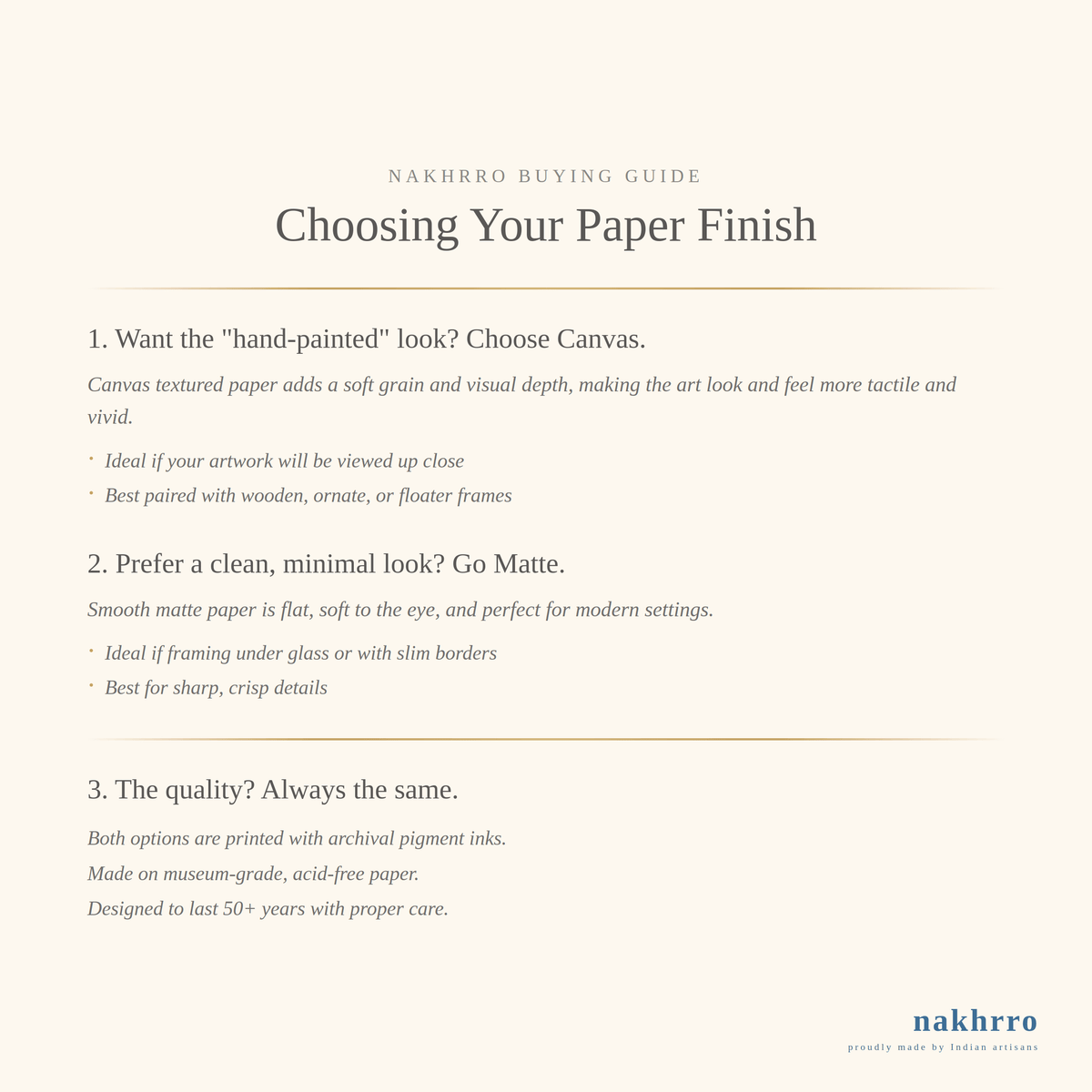
Paper is smooth and matte. Canvas has texture and depth. Both are archival.
How long will it last?
With proper care, 80–100 years. Trusted by museums worldwide.
Is framing available?
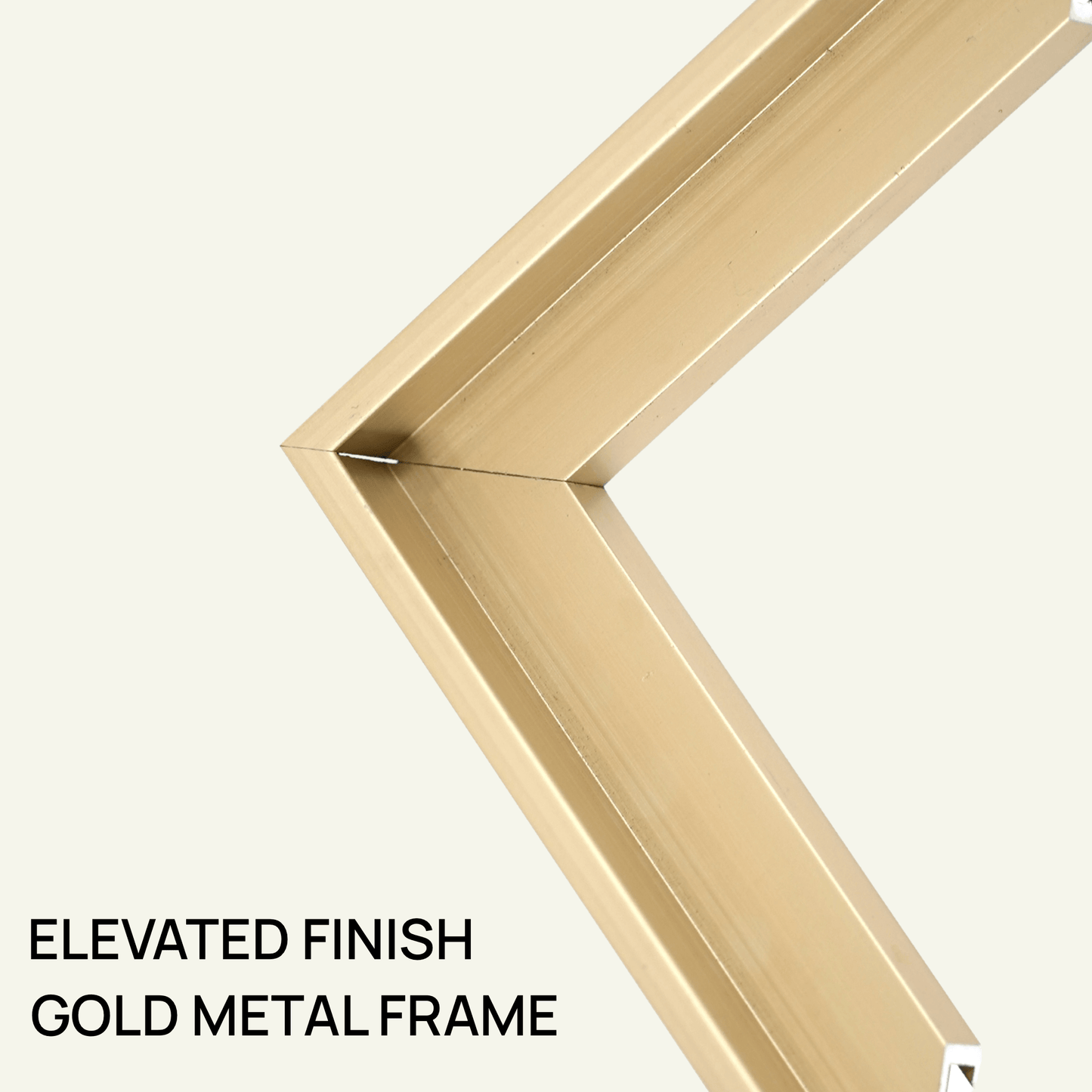
Yes. We offer framing in wood, metal, or fiber on request.
Before creation began, there was this — the cosmic dream from which all existence emerged.
Ananthashayanam is one of the most sacred and visually magnificent scenes in Hindu art. Lord Vishnu, the preserver of the universe, reclines in divine sleep upon Anantha Shesha — the infinite cosmic serpent who floats upon the Kshira Sagara, the ocean of milk. From Vishnu’s navel, a lotus rises, bearing Brahma — the creator god — about to set the universe in motion. Creation itself is about to begin.
This extraordinary Kerala mural captures the scene with the full visual power of Kerala’s 1,500-year-old temple painting tradition. Vishnu’s green-hued form is rendered with characteristic Kerala mural elegance — elongated eyes, serene expression, ornate gold jewellery, and the distinctive bold outlines that make this art form instantly recognisable. Surrounding him is an assembly of the greatest gods — Shiva with his crescent moon and third eye, Brahma the creator, Indra the king of gods, and other celestial beings, each painted with extraordinary ornamental detail.
Below the cosmic scene, devotees and celestial beings worship at the ocean’s edge, their forms reflected in stylised blue waves. A Shiva lingam in the lower corner grounds the cosmic vision in devotional practice.
The Kerala mural palette is unlike any other Indian art form — saturated golds, deep greens, warm oranges, and earth reds create a visual warmth that radiates from the wall. Every surface is decorated. Every ornament is detailed. The effect is of sacred abundance — an overflowing of divine presence.
About Kerala Mural Art:
Kerala mural painting is one of India’s oldest and most sophisticated art traditions, originating in temple walls across Kerala over 1,500 years ago. Characterised by bold black outlines, a limited but vibrant palette of five natural colours (Panchavarna), and extraordinarily detailed ornamentation, Kerala murals bring Hindu mythology to life with a visual power that rivals any art tradition in the world. The most famous surviving examples can be found at the Padmanabhapuram Palace and Mattancherry Palace.
Why this piece is special:
∙ Ananthashayanam is one of the most sacred compositions in Hindu art — the moment before creation
∙ Rendered in authentic Kerala mural style with extraordinary ornamental detail
∙ Features an assembly of major Hindu deities — Vishnu, Brahma, Shiva, and celestial beings
∙ The warm gold-green-orange palette creates a stunning visual impact on any wall
∙ A rare art form outside Kerala — most people have never seen Kerala murals of this quality
∙ Deeply meaningful for Vaishnavite devotees and anyone drawn to creation mythology
Vastu significance:
Vishnu Ananthashayanam is considered one of the most auspicious images for a Hindu home. Vishnu as the preserver represents protection, stability, and cosmic order. The scene of creation emerging from his divine rest symbolises new beginnings, abundance, and the infinite potential within stillness. Ideal for pooja rooms, meditation spaces, and the east or north wall of living rooms.
Share